Chip Clip Alternatives: 7 Ways to Close a Bag, Ranked by How Well They Seal
By GRIPSTIC Hawaii 3 min read
Short answer: The ways to close a bag that keep food freshest are the ones that seal the full width and keep air out: airtight containers, zip-top bags, and full-width bag sealers like GRIPSTIC. Chip clips, clothespins, rubber bands, and twist ties only hold one spot or bunch the bag, so air still gets in at the corners.
Key takeaways
- Snacks go stale when air and moisture reach them; any gap at the corners lets that happen.
- Clips and clothespins pinch one spot. Rubber bands and twist ties bunch the bag and leave channels for air.
- Containers and zip bags seal well but take space and mean emptying the original bag.
- A full-width sealer keeps the food in its own bag, seals edge to edge, and lies flat.
What makes a bag closure actually work?
Chips, crackers, and cereal go soft by absorbing moisture from the air, and they taste stale as their oils react with oxygen. We explain the science in why snacks go stale. So the test for any closure is simple: does it stop air getting in across the whole opening?
How do the common options compare?
Ranked from the weakest seal to the strongest:
- Folding the bag over on itself: free, but it unfolds and doesn't seal at all.
- Twist ties and rubber bands: they bunch the bag, which leaves folds and channels where air moves in. Rubber bands also dry out and snap.
- Clothespins and binder clips: cheap and strong, but they grip one spot. The corners stay open.
- Chip clips: wider than a clothespin, but most still pinch only the middle of the bag and leave gaps at the ends.
- Zip-top bags: seal well, but you have to pour the food in, and most are thrown away after a few uses.
- Airtight containers: excellent seal, but they take shelf space, and big bags don't fit.
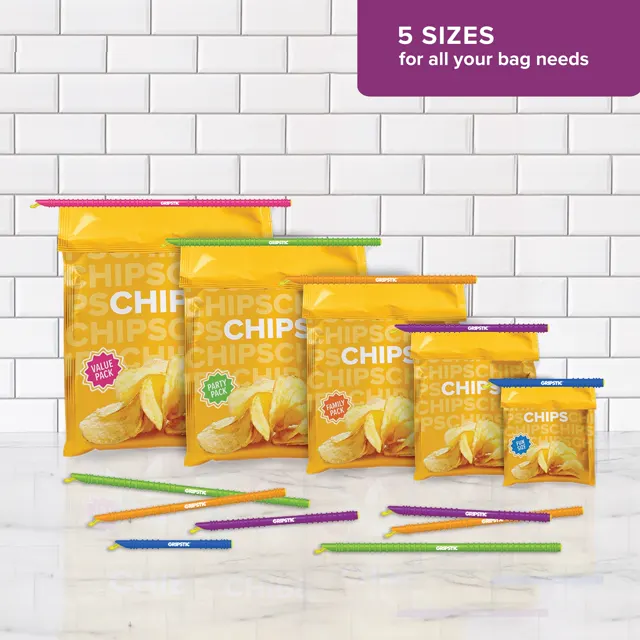
- Full-width bag sealers like GRIPSTIC: fold the bag once and slide the sealer across it. It clamps the bag edge to edge for an airtight, watertight seal, keeps food in its own bag, and lies flat so sealed bags stack.
Why is GRIPSTIC different from a chip clip?
A chip clip pinches one spot and leaves the corners open to air. A GRIPSTIC seals the bag edge to edge. Fold the open end once, set the yellow inner guide under the fold, and slide it across. It's BPA-free, dishwasher safe, and works in the pantry, fridge, and freezer.
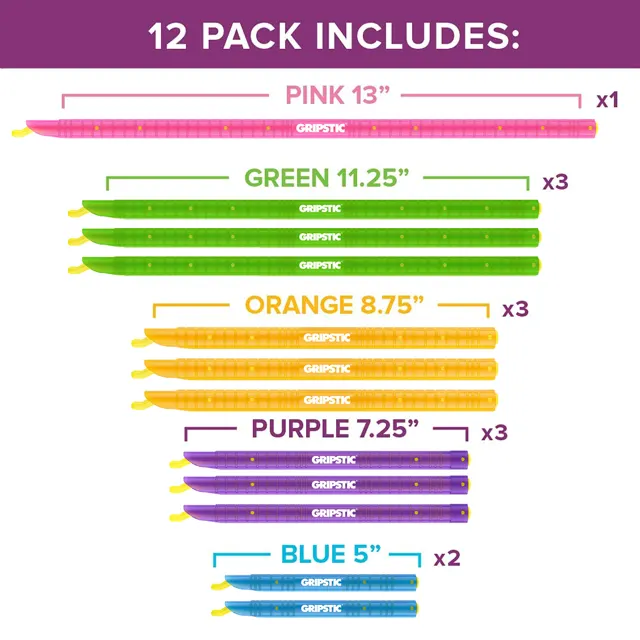
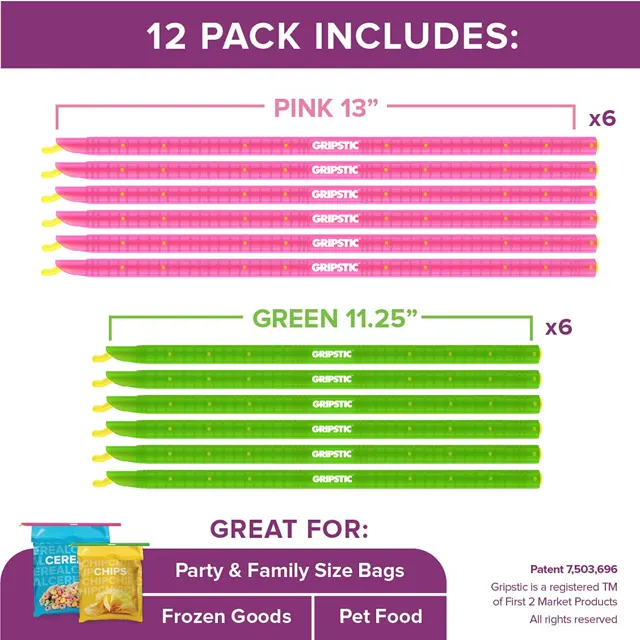
It comes in five lengths (5", 7.25", 8.75", 11.25", and 13"), so you match it to the bag. The 12-Pack Assorted Set has every size; the size guide shows which bag takes which length.
Which option should you use for what?
- Chips, crackers, cereal, coffee: a full-width sealer, so the food stays in its bag.
- Frozen vegetables and fruit: a full-width sealer, with the air pressed out; see preventing freezer burn.
- Leftovers and cut produce: airtight containers.
- Big bags of rice and pet food: a heavy-duty sealer sized to the bag, like our Heavy Duty Handles.
Frequently asked questions
- What can I use instead of a chip clip?
- A full-width bag sealer such as GRIPSTIC, a zip-top bag, or an airtight container. All three keep air out better than a clip.
- Do chip clips keep chips fresh?
- Only partly. Most clips pinch one spot and leave the corners open, so air and moisture still get in.
- What's the best way to close a bag of chips without a clip?
- Press out the air, fold the top over once, and seal it across the full width with a bag sealer. If you have nothing else, pour the chips into an airtight container.
- Can GRIPSTIC be used on cereal bags?
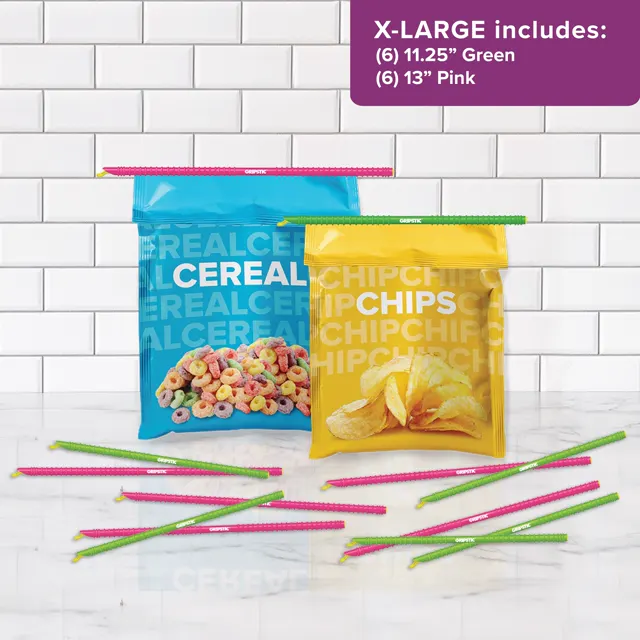
- Yes. It works on any flexible bag you can fold over once, including cereal liners, chips, coffee, and frozen vegetables.
More in our FAQ and how-to guide.
Shop the sealers in this article